

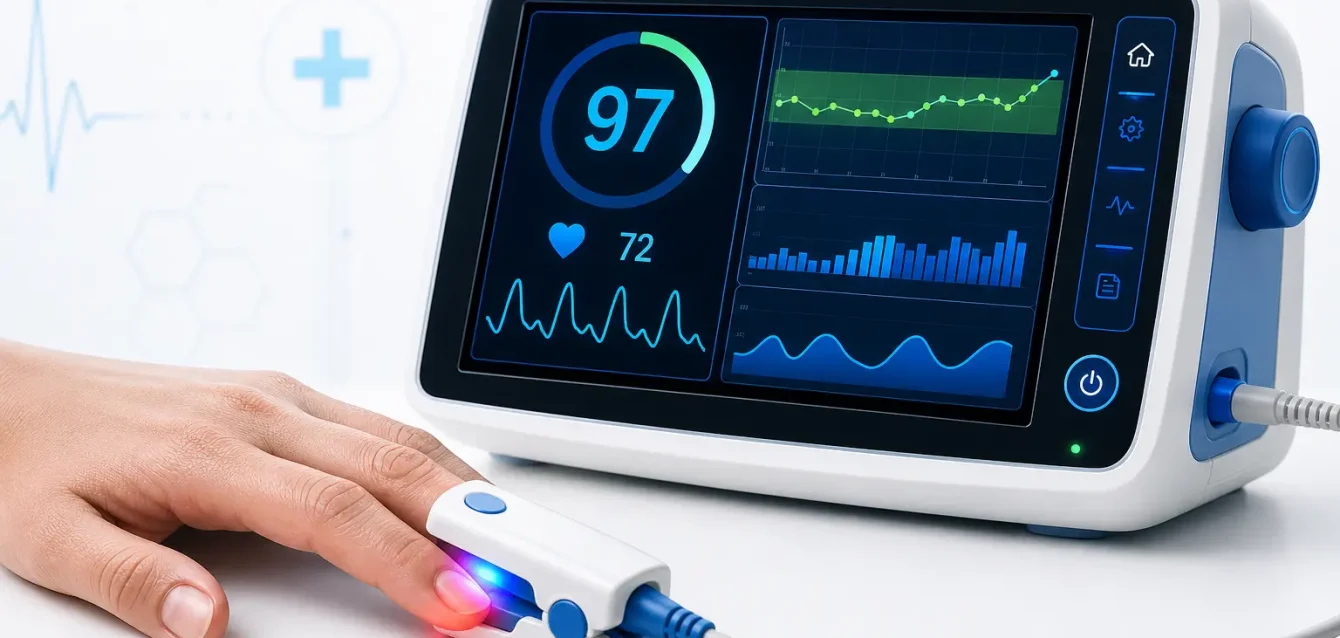
Peripheral Oxygen Saturation as a Clinical Window
Peripheral oxygen saturation (SpO2), measured non-invasively through pulse oximetry, provides a continuously available indicator of respiratory function that is among the most sensitive early warning parameters for cardiorespiratory deterioration. Unlike many clinical variables that require laboratory analysis or invasive measurement, pulse oximetry yields instantaneous quantitative data through a simple, patient-tolerated measurement. This combination of clinical significance and measurement accessibility makes pulse oximetry an indispensable component of any comprehensive medical monitoring platform.
Limitations of Conventional Pulse Oximetry Interpretation
The interpretation of SpO2 measurements in clinical practice is subject to several important considerations that limit the utility of isolated readings. Physiological variability, motion artifact, peripheral vasoconstriction, abnormal hemoglobin species, and device-specific accuracy differences all influence the reliability of individual measurements. Furthermore, the relationship between SpO2 and arterial oxygen content is non-linear due to the sigmoidal shape of the oxyhemoglobin dissociation curve, meaning that clinically significant desaturation can occur before SpO2 values fall below conventional alert thresholds.
Artificial intelligence addresses these limitations by operating on temporal patterns rather than isolated values. Machine learning models trained on physiological monitoring data can distinguish artifact-contaminated measurements from genuine desaturation events, identify subtle trends preceding clinically apparent deterioration, and contextualize SpO2 values within the patient’s broader physiological profile including concurrent heart rate and respiratory rate data.
AI-Enhanced Oximetry Within Medical POI Platforms
Medical Points of Intelligence integrate clinical-grade pulse oximeters that acquire photoplethysmographic waveforms suitable for both SpO2 calculation and waveform morphology analysis. The plethysmographic signal contains information beyond oxygen saturation, including estimates of vascular tone, cardiac output-related parameters, and respiratory-induced waveform variation that correlates with fluid status and respiratory effort. AI algorithms applied to the full photoplethysmographic waveform, rather than the derived SpO2 value alone, extract a richer clinical picture from each measurement episode.
In the context of chronic respiratory disease monitoring — including COPD, interstitial lung disease, and post-COVID respiratory sequelae — longitudinal SpO2 data acquired through regular POI encounters builds a patient-specific baseline against which deterioration can be detected with sensitivity superior to conventional threshold-based alerts. This personalized monitoring approach is particularly valuable for patients at elevated risk of acute exacerbations, where early detection and intervention can prevent hospitalization.
Population Respiratory Surveillance
During the COVID-19 pandemic, the public health utility of widespread pulse oximetry access became dramatically apparent, as silent hypoxemia emerged as a critical and underrecognized feature of the disease’s clinical spectrum. The deployment of AI-enabled pulse oximetry through medical POI networks creates a distributed respiratory surveillance infrastructure capable of detecting population-level respiratory deterioration patterns that may signal emerging infectious or environmental threats. This capability represents a significant advance in pandemic preparedness and public health intelligence.
Conclusion
AI-enhanced pulse oximetry integrated within distributed medical POI platforms extends the clinical value of this fundamental monitoring parameter from episodic measurement to continuous, intelligent surveillance. By applying machine learning to both individual measurements and longitudinal trends, these systems provide clinicians, patients, and public health authorities with respiratory intelligence that supports individual care optimization and population health management simultaneously.