

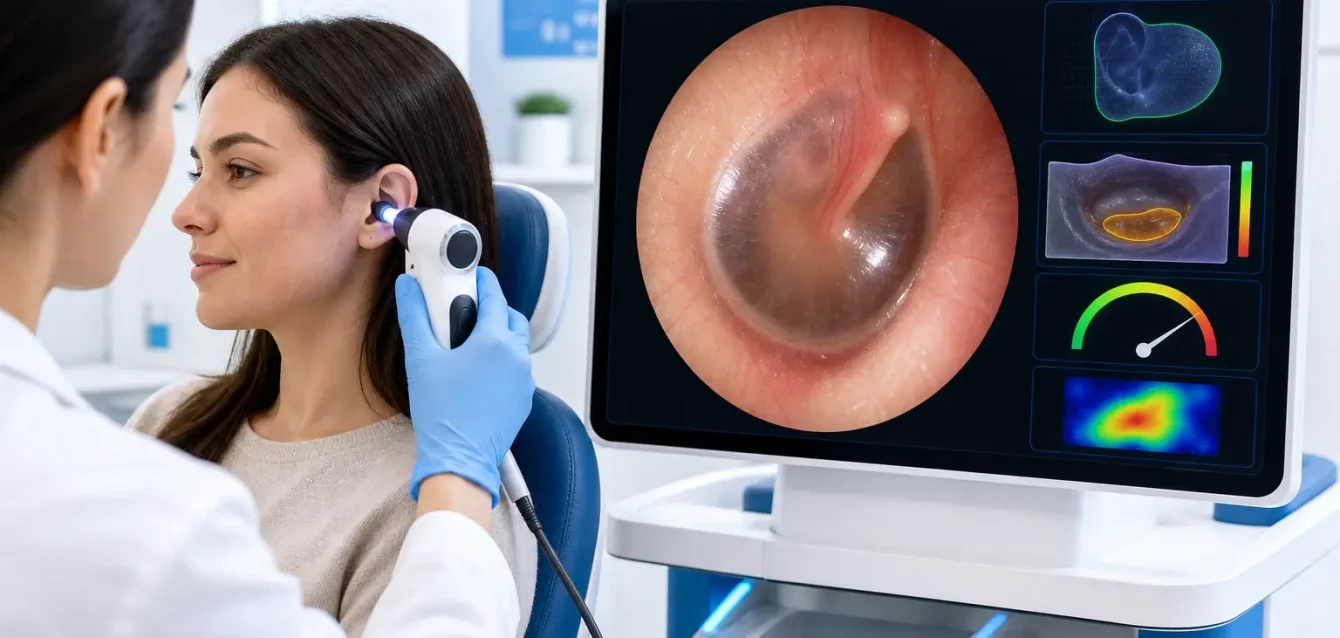
Ear Disease: Prevalence, Impact, and Diagnostic Barriers
Otitis media represents one of the most common diagnoses in pediatric primary care globally, accounting for a substantial proportion of antibiotic prescriptions in children and constituting a leading cause of hearing impairment in low- and middle-income countries. Despite its prevalence, accurate diagnosis of otitis media and the clinically important distinction between its bacterial and viral subtypes — with direct implications for antibiotic prescribing appropriateness — requires direct visualization of the tympanic membrane under adequate illumination and magnification. This requirement has historically constrained diagnostic accuracy in time-pressured primary care consultations and created an access barrier in settings where otoscopes and trained examiners are not reliably available.
Computational Approaches to Tympanic Membrane Analysis
The tympanic membrane presents a well-defined visual substrate for machine learning classification. Its structural features — color, reflectivity, landmarks including the umbo and cone of light, membrane mobility, and the presence or absence of fluid, perforation, or inflammatory changes — provide a rich set of discriminating characteristics that convolutional neural networks can be trained to evaluate with high sensitivity and specificity. Research studies comparing AI classification of otoscopic images with specialist otolaryngologist diagnosis have demonstrated performance levels supporting clinical deployment in screening contexts.
Beyond binary normal/abnormal classification, AI models capable of distinguishing specific otitis media subtypes — acute bacterial otitis media, otitis media with effusion, chronic suppurative otitis media, and tympanosclerosis — provide clinicians with decision support at the level of specificity required for appropriate treatment selection. The automated generation of structured otoscopic reports aligned with clinical diagnostic criteria enables telemedicine consultation workflows in which otolaryngologists review AI-analyzed images and provide management guidance without physical examination.
Digital Otoscopy Within Medical POI Platforms
Medical Points of Intelligence incorporating digital video otoscopes with AI-assisted illumination control enable standardized tympanic membrane image acquisition in community settings, guided by on-screen positioning instructions that optimize image quality prior to capture. The AI interpretation system analyzes captured images immediately, generating a structured diagnostic assessment that is transmitted to the patient’s medical record and flagged for remote clinician review when findings indicate clinical significance.
This capability is particularly valuable in pediatric care settings where POI stations are deployed in schools, pharmacies, or community health centers — contexts where parents bring children with ear symptoms seeking assessment without the capacity to wait for primary care appointments. Immediate AI-assisted assessment with remote clinician confirmation enables appropriate treatment initiation or specialist referral at the point of first patient contact, reducing disease duration, antibiotic misuse, and unnecessary emergency department utilization.
Conclusion
AI-enhanced digital otoscopy within medical POI platforms democratizes access to ENT-quality tympanic membrane assessment at distributed care points. By combining standardized image acquisition with validated AI interpretation and seamless integration with remote clinical consultation workflows, these systems address a significant diagnostic gap in primary and community care — enabling accurate ear disease assessment and appropriate management at every medical POI deployment site.