

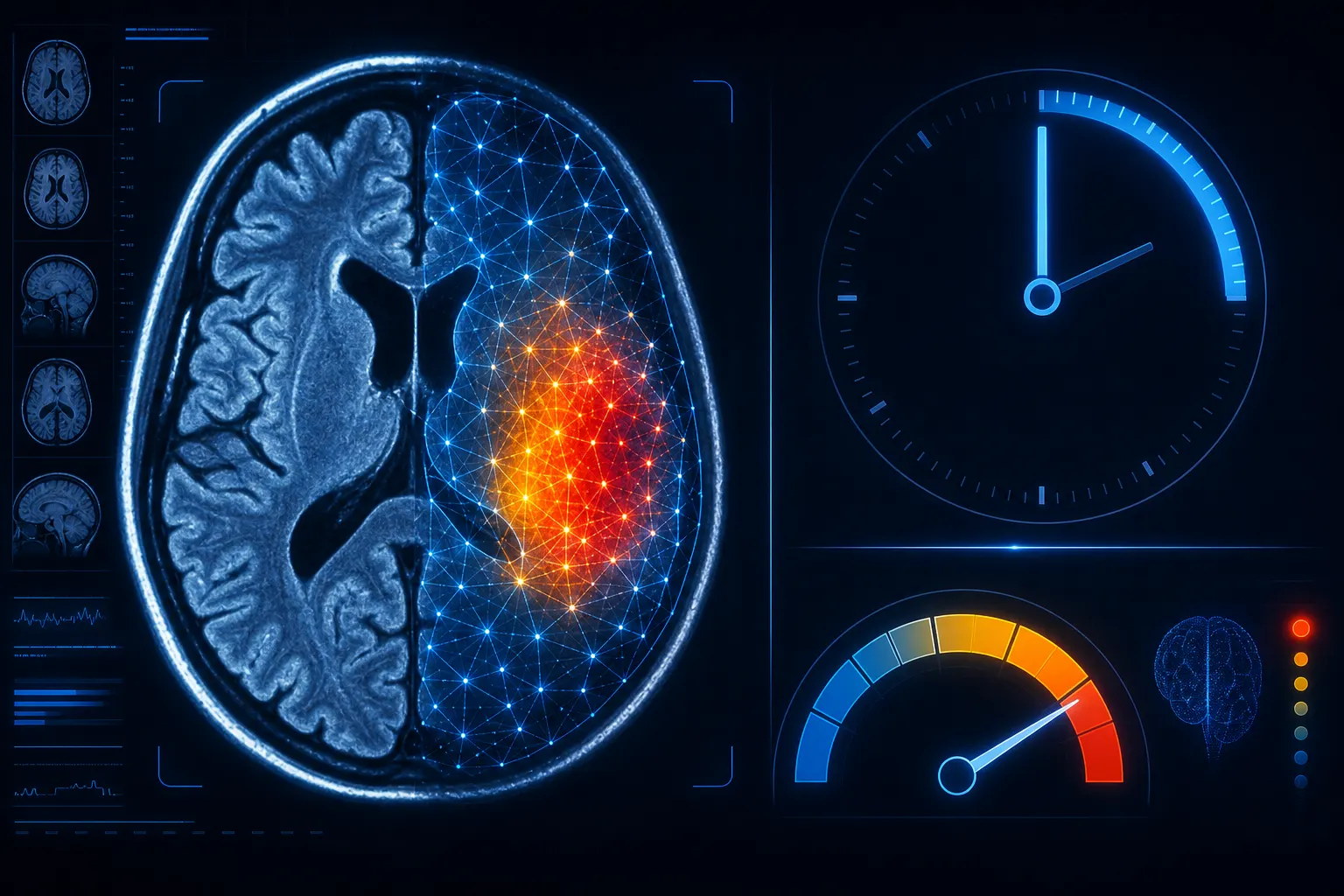
Acute ischemic stroke exemplifies the principle that time is tissue. Each minute of delayed reperfusion results in the irreversible loss of approximately 1.9 million neurons. The therapeutic window for intravenous thrombolysis (tPA) extends to 4.5 hours from symptom onset, while mechanical thrombectomy maintains efficacy to 24 hours for selected patients. Artificial intelligence applied across the stroke care pathway—from prehospital screening to in-hospital triage and imaging interpretation—has demonstrated consistent reductions in time-to-treatment metrics that translate directly to improved neurological outcomes.
Prehospital and Triage-Level Stroke Recognition
The Cincinnati Prehospital Stroke Scale and FAST criteria identify large-vessel occlusion (LVO) with sensitivity of approximately 79–85%, but specificity remains low, generating a significant proportion of false stroke alerts. AI-enhanced prehospital screening tools trained on paramedic assessment data, including facial asymmetry detection via camera-based systems, have demonstrated improved LVO sensitivity of up to 91% in prospective validation cohorts (Kunz et al., Stroke, 2021). At the ED triage desk, NLP-based chief complaint analysis can flag stroke-consistent language in nurse-documented presentations, triggering stroke protocol activation before physician assessment.
AI in Stroke Imaging Workflow
Non-contrast CT and CT angiography (CTA) interpretation for LVO detection represents an area of particularly strong AI performance. FDA-cleared algorithms such as RapidAI and Viz.ai have demonstrated sensitivity exceeding 91% and specificity above 89% for LVO detection, with processing times under three minutes from scan acquisition. The key clinical value is not autonomous diagnosis but rather automated notification: immediate alert to the stroke interventionist on call, triggered by AI-detected LVO before the radiologist has opened the case. A multicentre study published in JAMA Neurology (Olive-Gadea et al., 2020) demonstrated a median reduction of 15 minutes in door-to-reperfusion time following deployment of AI-based LVO notification. Within integrated AI triage environments—such as those embodied by platforms like ERTRIAGE® (ertriage.com)—the imaging alert feeds back into the patient’s triage record, creating a closed-loop clinical pathway from first contact to intervention.
Outcome Data and Equity Considerations
Randomised evidence for AI-assisted stroke care remains limited, with most published data deriving from observational before-after designs. Nevertheless, the consistency of time-to-treatment reductions across multiple independent implementations provides reasonable confidence in clinical utility. A critical outstanding question concerns algorithmic equity: stroke presentations in women and patients of African descent are systematically underrepresented in most training datasets, raising the possibility that AI tools trained on majority-population data may underperform in these groups. Prospective, stratified performance reporting is therefore a minimum requirement for responsible deployment.